
A Wall Can Leak Behind An Intact Exterior
Water stains indoors can begin with a defect that is difficult to see from outside. Siding is one part of an exterior wall, and its appearance does not reveal the condition of every joint, flashing detail or concealed layer. Water that passes the cladding needs a managed route back out. When that route is interrupted, moisture can affect sheathing, insulation and interior finishes before the owner notices a visible symptom.
A useful investigation connects the exterior defect with the affected assembly. Replacing a stained interior panel without addressing the entry route can leave the same problem behind the repair. Replacing siding without checking the damaged wall beneath can also produce an incomplete result. Coordinate both sides of the wall before defining the final scope.
Follow Patterns Without Assuming The Cause
Record whether the stain appears after wind-driven rain, melting snow or another repeatable event. Note its location relative to windows, doors, roof intersections and exterior penetrations. Photographs and dates can help the contractor choose where to investigate. These observations guide the assessment, but they do not prove which component failed.
A stain below a window may involve the window opening, the wall above it or another route altogether. Plumbing leaks and indoor condensation can also affect exterior walls. Keep alternative explanations open until the inspection supports a conclusion. Avoid applying sealant to every nearby seam before documenting the original condition.
Understand The Layers Behind The Siding
Depending on the wall design, the assembly may include cladding, a drainage space, a water-resistive barrier, sheathing, insulation and interior finishes. Flashing helps manage water at interruptions such as openings and roof-to-wall junctions. The details must work together so water is directed outward rather than into a vulnerable joint.
This is why a siding repair should identify the actual assembly instead of relying on a general detail copied from another house. Product requirements and existing construction both affect the solution. Ask the contractor what will be exposed, which layers will be checked and how the repaired detail will connect with the surrounding wall.
Look For Evidence Of Concealed Damage
Inside, warning signs can include staining, peeling finishes, damp trim or a persistent musty odour. Outside, damaged joints, displaced panels and deterioration around openings can warrant investigation. None of these symptoms establishes the full extent of damage by itself. A small visible mark may be only the accessible portion of a larger affected area.
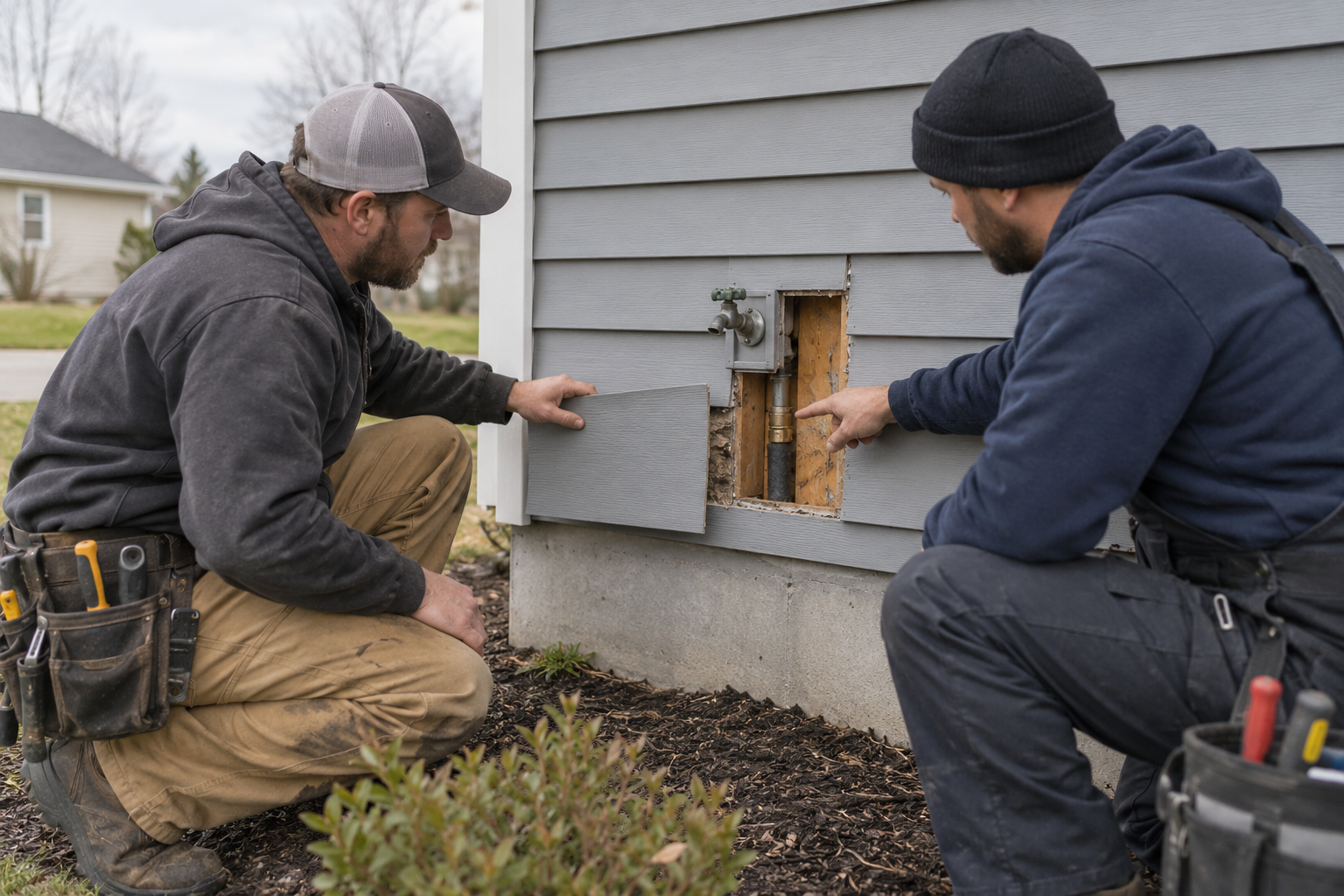
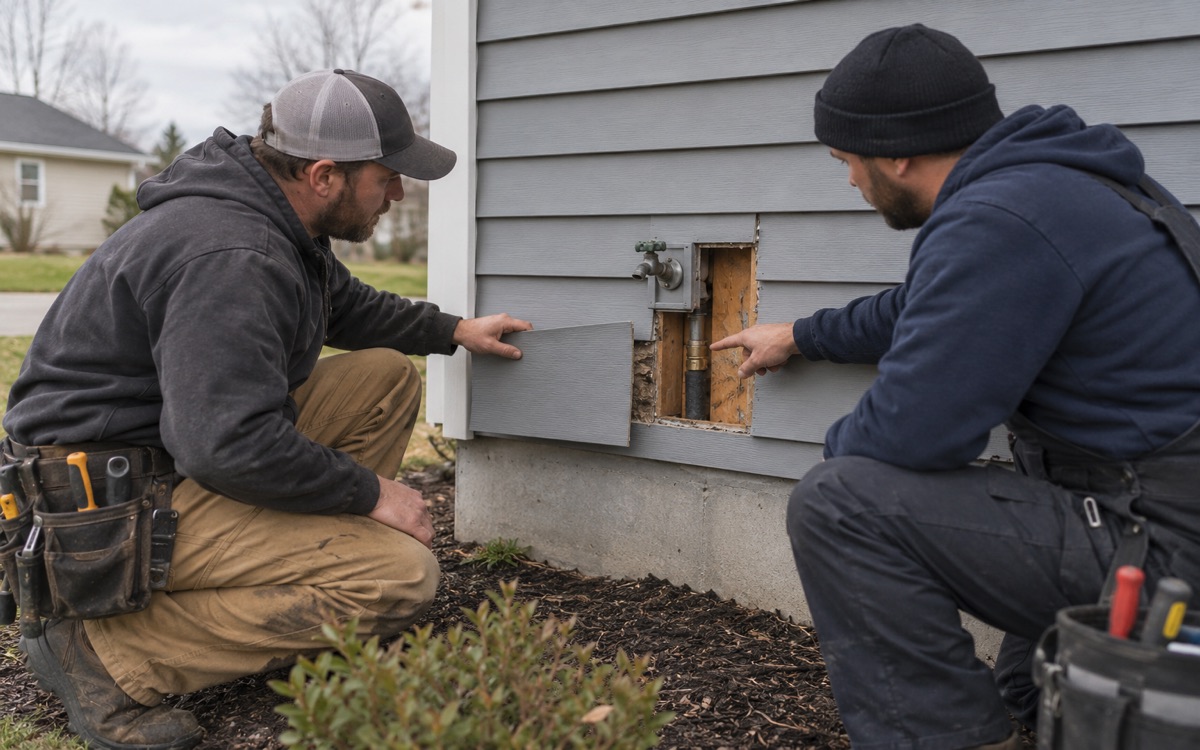
Where selective opening is needed, the contractor can assess sheathing condition, insulation and framing. Any soft, deteriorated or structurally concerning material needs appropriate evaluation before it is covered. Do not probe an unstable wall or remove cladding at height yourself to confirm a suspicion. Safe access and controlled investigation are part of the work.
Repair Water Entry And Interior Damage Together
The exterior contractor and restoration provider should agree on the source repair and drying sequence. Edmonton Water Damage Restoration offers an external overview of water damage restoration that helps distinguish the recovery stages. At the property, the actual findings should determine whether concealed materials can remain and when the wall is ready to close.
Assign responsibility for temporary weather protection while the wall is open. Also clarify who communicates if the investigation finds a larger affected area than expected. A good work plan leaves a clear decision point before damaged materials are concealed and before a change in scope becomes an unexpected invoice.
Avoid Repairs That Block Intended Drainage
Extra caulking is not a universal solution to water entry. A repair that blocks an intended drainage opening can interfere with the wall’s ability to release water. The contractor should follow the cladding and accessory manufacturers’ details and account for the existing drainage arrangement. Ask why a proposed seal belongs in that location and how water will leave the assembly afterward.
Pay attention to transitions between materials. A window replacement, deck attachment or new vent may have changed an older wall detail. Tell the contractor about recent work even if it seemed unrelated to the first stain. The repair needs to integrate those interfaces rather than focus only on the largest section of siding.
Document The Wall Before It Is Covered
Request photographs of the exposed condition and completed concealed details. Keep the identified entry point, removed materials and any follow-up recommendation in the repair record. These records help future contractors understand what changed without reopening the wall simply to identify the previous work.
Agree how the repair will be checked and what limits apply to that check. An inspection during dry weather cannot demonstrate performance in every future storm. If controlled water testing is proposed, have it performed by an appropriate professional using a defined method. Unplanned spraying can introduce more water and produce misleading results.
Before materials are ordered, discuss how replacement panels will match the existing profile and finish. A discontinued siding product may require a considered transition or a wider replacement area. Confirm that appearance decisions do not override the flashing and drainage work needed beneath the cladding. Keep the selected product and proposed repair boundary in the written scope so everyone approves the same result.
Common Questions About Siding And Water Damage
Does New Siding Solve Every Wall Leak?
Only if the actual defect and affected underlying details are addressed. New panels can improve the exterior finish while leaving a failed transition or damaged layer beneath. Ask the contractor to explain the connection between the diagnosed cause and each part of the proposed repair.
Can The Interior Be Painted First?
Finish repairs should follow source correction and the assessment of affected materials. Painting early can hide useful evidence and may need to be repeated. If temporary appearance work is necessary, discuss its limits with the contractors and keep the original condition documented.
What Should I Watch After The Repair?
Monitor the original area during the conditions associated with the leak and report new moisture promptly. Keep observations factual, including dates and photographs. Follow the contractor’s maintenance recommendations for the installed siding and details, and retain the repair record for any future investigation.
Easy steps to create a color palette
Lorem ipsum dolor sit amet, consectetur adipiscing elit lobortis arcu enim urna adipiscing praesent velit viverra sit semper lorem eu cursus vel hendrerit elementum morbi curabitur etiam nibh justo, lorem aliquet donec sed sit mi dignissim at ante massa mattis.
- Neque sodales ut etiam sit amet nisl purus non tellus orci ac auctor
- Adipiscing elit ut aliquam purus sit amet viverra suspendisse potent
- Mauris commodo quis imperdiet massa tincidunt nunc pulvinar
- Excepteur sint occaecat cupidatat non proident sunt in culpa qui officia
What is a color palette?
Vitae congue eu consequat ac felis placerat vestibulum lectus mauris ultrices cursus sit amet dictum sit amet justo donec enim diam porttitor lacus luctus accumsan tortor posuere praesent tristique magna sit amet purus gravida quis blandit turpis.

Don’t overspend on growth marketing without good retention rates
At risus viverra adipiscing at in tellus integer feugiat nisl pretium fusce id velit ut tortor sagittis orci a scelerisque purus semper eget at lectus urna duis convallis porta nibh venenatis cras sed felis eget neque laoreet suspendisse interdum consectetur libero id faucibus nisl donec pretium vulputate sapien nec sagittis aliquam nunc lobortis mattis aliquam faucibus purus in.
- Neque sodales ut etiam sit amet nisl purus non tellus orci ac auctor
- Adipiscing elit ut aliquam purus sit amet viverra suspendisse potenti
- Mauris commodo quis imperdiet massa tincidunt nunc pulvinar
- Adipiscing elit ut aliquam purus sit amet viverra suspendisse potenti
What’s the ideal customer retention rate?
Nisi quis eleifend quam adipiscing vitae aliquet bibendum enim facilisis gravida neque euismod in pellentesque massa placerat volutpat lacus laoreet non curabitur gravida odio aenean sed adipiscing diam donec adipiscing tristique risus amet est placerat in egestas erat.
“Lorem ipsum dolor sit amet consectetur adipiscing elit, sed do eiusmod tempor incididunt ut labore et dolore magna aliqua enim ad minim veniam.”
Next steps to increase your customer retention
Eget lorem dolor sed viverra ipsum nunc aliquet bibendum felis donec et odio pellentesque diam volutpat commodo sed egestas aliquam sem fringilla ut morbi tincidunt augue interdum velit euismod eu tincidunt tortor aliquam nulla facilisi aenean sed adipiscing diam donec adipiscing ut lectus arcu bibendum at varius vel pharetra nibh venenatis cras sed felis eget.